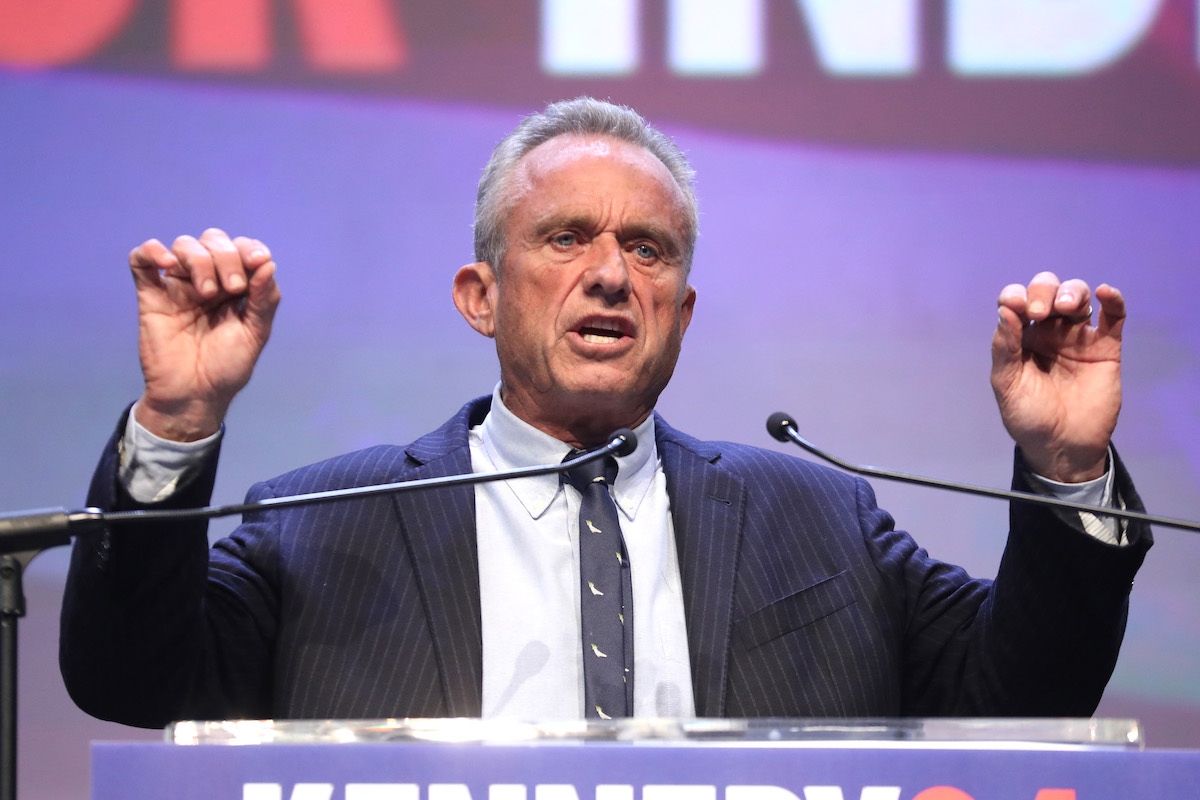
Global and national health experts, ethicists, physicians, health care groups, and even autism advocates are sounding alarms and lobbying against Trump’s nomination of Robert F. Kennedy, Jr. for Secretary of Health and Human Services.
While there’s been no shortage of news coverage, journalists must continue reporting this story until Kennedy undergoes Senate confirmation hearings. Audiences need ongoing, accurate information about what he believes about various health issues and what powers he would have as HHS Secretary so that they can communicate to their senators how they feel about the confirmation.
Related: Understanding RFK Jr.’s potential HHS powers and why to avoid ‘sane-washing’ him
This tip sheet provides an overview of key points journalists can consider while planning coverage. It concludes with some solid examples of articles about his beliefs, goals and potential powers if confirmed as HHS Secretary.
Kennedy’s crusade against vaccines goes back decades
Kennedy’s opposition to vaccines is not recent. He has been campaigning against them for over 20 years, dating back to concerns about thimerosal in vaccines. An excellent Q&A with Paul Offit, an infectious disease physician at Children’s Hospital of Philadelphia and co-developer of the rotavirus vaccine, offers a thorough history of Kennedy’s entry into anti-vaccine advocacy, which has been the centerpiece of his health-related agenda for two decades. It recounts the conversation Offit had with Kennedy 20 years ago, which Offit wrote about last year.
As someone who has specialized in reporting on vaccines for about 14 years, I’ve also watched Kennedy’s career from early on and have interviewed him. I’ve seen how he is not influenced by power, money or fame but rather by zealotry. He genuinely believes he is saving children from the dangers of vaccines — to the point that he will tell strangers on the street or on hiking trails with babies not to vaccinate their children.
During the pandemic, Kennedy’s anti-vaccine organization Children’s Health Defense — which doubled his weekly salary in 2023 — exploited people’s uncertainties about vaccines to bring in more than $23.5 million in donations, which it has used to continue promoting disinformation about vaccines. That includes nearly 30 lawsuits related to vaccine requirements, data on vaccine adverse events, and Covid vaccines.
Here’s what to watch out for: Kennedy will repeatedly attempt to deny that he is “anti-vaccine.” Journalists should be cautious not to credulously repeat this claim without making it clear that he is, undeniably, in his own words and through his actions, opposed to all licensed and recommended vaccines.
Key takeaway
Kennedy will tell journalists he is not anti-vaccine. This is not accurate. He has been an anti-vaccine activist for two decades.
Kennedy’s role in a deadly measles epidemic in Samoa
I asked during a recent webinar how journalists can convey the seriousness of the risk of Kennedy influencing vaccine policy, and Washington Post health policy reporter Dan Diamond said to look no further than the deadly outbreak of measles in Samoa in 2019. The outbreak, which killed 83 people, began four months after Kennedy visited and spread misinformation about the measles vaccine; he later called the outbreak “mild.” Hawaii governor Josh Green, who is also a doctor, has described visiting the island to vaccinate and care for residents there.
Kennedy did not cause the existing low rates of measles immunization that allowed the outbreak to begin and rapidly spread. But he undeniably played a role in keeping fears about measles vaccination high, allowing the outbreak to continue, and downplaying its seriousness. Read the details from Brian Deer, the journalist who uncovered Andrew Wakefield’s fraud.
Key takeaway
Kennedy has directly contributed to vaccine hesitancy before and during a deadly measles outbreak that he subsequently downplayed.
Prepare for Kennedy’s effective manipulation and misrepresentation of vaccine research
One way Kennedy has maintained his platform for spreading misinformation about vaccines is by using a common anti-vaccine tactic of misrepresenting, twisting, or cherry-picking scientific research to support his points. In interviews, he frequently brings up studies that arouse concerns about vaccines and sound persuasive. He knows citing scientific evidence buttresses his argument, and he’s well-versed in misrepresenting the science to do so.
For example, he frequently cites a study about the DTP (diphtheria-tetanus-pertussis) vaccine that suggests it increased the risk of death in those who received it. The authors of that study — which had substantial flaws — published a follow-up study to clarify how the methods they used skewed the results; their re-analysis of the data with appropriate methods showed a 37% decrease in deaths in those who received the vaccine. This is only one example. Credible science bloggers have written over the years about many other examples at the sites Science-Based Medicine, Respectful Insolence, Skeptical Raptor and Left Brain Right Brain.
Key takeaway
Don’t be dazzled or caught off guard by Kennedy citing research to back up his claims; he regularly twists or cherry-picks it to misrepresent the evidence, and he’s adept at using the Gish gallop to overwhelm his audience with misinformation.
Accurately convey the risk of vaccine-preventable diseases’ returning
Journalists need to make clear to their audiences that vaccines save lives — more than 154 million in just the last 50 years, and that doesn’t even include the HPV, flu or Covid vaccines. Doing so also means painting an unvarnished picture of what it would look like if vaccine-preventable diseases return, including an increase in deaths. One effective approach is, for example, to describe what having one of these diseases is like.
Two past Washington Post stories that have done a good job of this include Lena Sun’s story last July on what it’s like to survive measles and a 2019 opinion piece by microbiologist Paul Duprex on just how devastating measles was in the past. Audiences may also not know about the severe complications and long-term effects of measles.
For example, damage to the immune system from a measles infection can cause immune amnesia, reducing antibodies against other diseases so that the body literally “forgets” how to fight other diseases.
Another rare but deadly complication of measles is subacute sclerosing panencephalitis (SSPE), a progressive neurological disorder that develops anywhere from two to 10 years after a measles infection. This horrific disease always ends in death, and the deterioration resembles what Alzheimer’s might look like in a child or teenager. It occurs more often than was previously believed, which means a nationwide measles outbreak of thousands of cases would inevitably result in some children dying of SSPE.
That’s just measles. At least two children have died of pertussis in the current U.S. surge of cases, and a Spanish child died in 2015 from the first case of diphtheria seen there in three decades. If you’re looking for people willing to discuss their experiences with a vaccine-preventable disease, the vaccine advocacy groups Voices for Vaccines and Families Fighting Flu have many stories, such as a mother’s experience with her daughter’s pertussis and a woman who lost her sister to diphtheria.
Key takeaway
Vaccines save lives. Low vaccination rates can lead to deaths.
Resources
The following articles are exemplary examples of reporting on Kennedy’s vaccine policy, plans and potential powers. They include a wealth of information, links, and source ideas:
- RFK Jr.’s COVID-19 Deceptions, regarding his misinformation about vaccines, FactCheck.org
- What RFK Jr. Gets Wrong About Autism, FactCheck.org
- The Anti-Vaccine Propaganda of Robert F. Kennedy, Jr., McGill University Office for Science and Society
- 10 RFK Jr. conspiracy theories and false claims, in his own words, Washington Post
- What to know about RFK Jr.’s views on food, vaccines, abortion, and the FDA, STAT News
- The many legal fronts of RFK Jr.’s fight against vaccines, STAT News
- Fact-checking Presidential Candidate Robert F. Kennedy, Jr., on Vaccines, Autism, and Covid-19, Annenberg Policy Center
- “Compelled by Our Fears”: RFK Jr. and Vaccine Doubt, A conversation with Paul Offit about Kennedy, Think Global Health
- RFK Jr and vaccine safety – using a bad study to come to bad conclusions, Skeptical Raptor